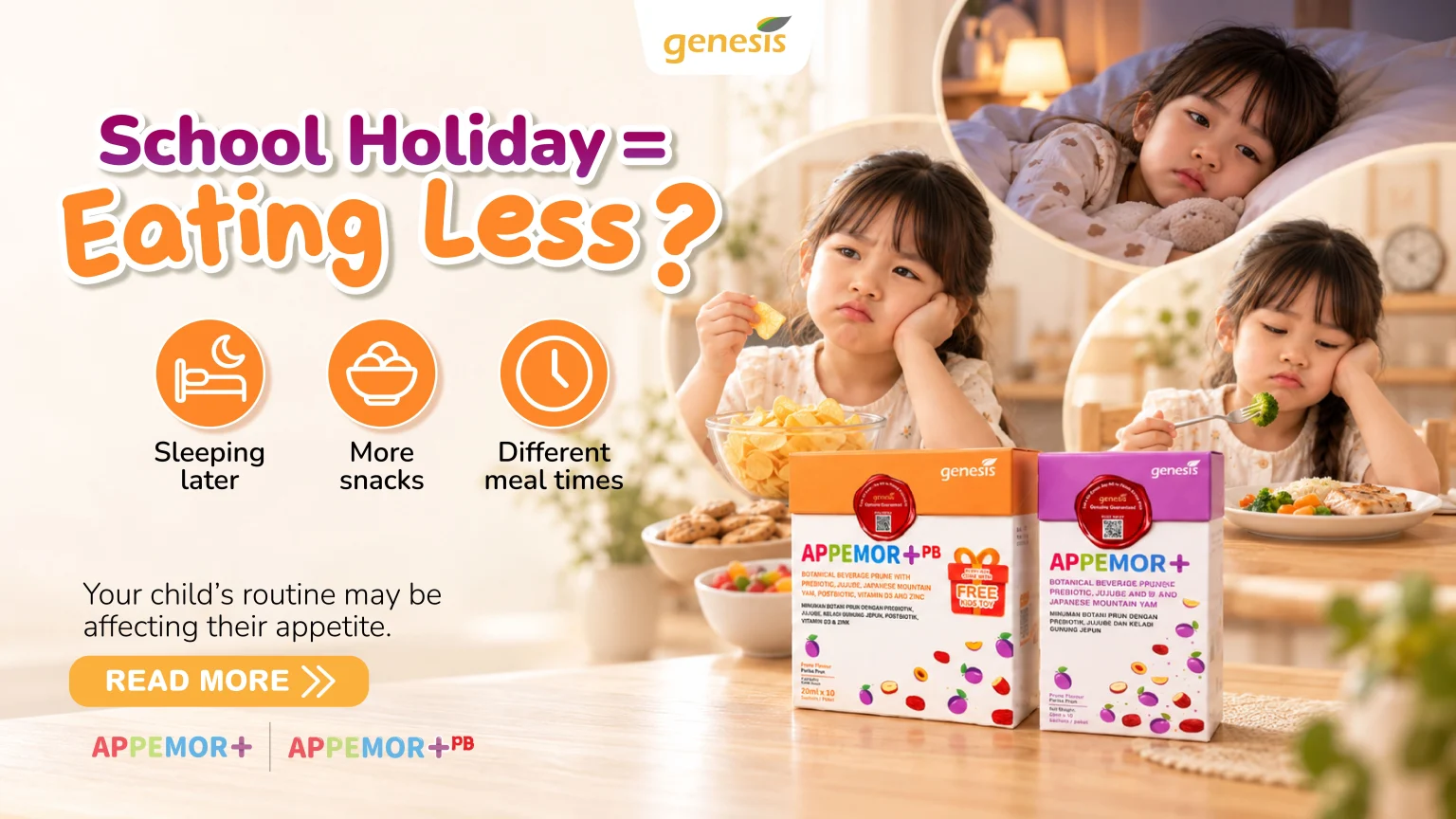
Advertisement featuring two children looking uninterested in their meals during the school holidays, with two Genesis APPEMOR+ and APPEMOR+ PB product boxes displayed on a dining table. Text highlights changes in sleep schedules, snacking habits, and meal times that may affect children's appetites.

学校假期到了,为什么孩子反而吃得更少?

Advertisement featuring two children looking uninterested in their meals during the school holidays, with two Genesis APPEMOR+ and APPEMOR+ PB product boxes displayed on a dining table. Text highlights changes in sleep schedules, snacking habits, and meal times that may affect children's appetites.

放假对孩子来说当然很开心。 但有些家长却发现:

“奇怪,放假后怎么反而吃得更少?”

其实,食欲变化有时候不一定代表孩子出现问题。

也可能只是因为原本的生活规律改变了。


晚起床,用餐时间也跟着延后

上学期间,孩子通常有较固定的生活节奏:

起床、早餐、上学、午餐、晚餐。

到了学校假期,晚睡晚起后,早餐可能变成早午餐

接下来一整天的用餐时间也自然往后延。


在家,零食更容易随手拿

一片饼干、一杯牛奶、一点水果,然后再来一份小零食。

虽然每一次吃得不多,但累积起来也足以影响正餐的饥饿感。


活动量改变,食欲也可能跟着改变

孩子在学校需要走动、上课、活动及游戏。

假期如果大部分时间都待在家,活动量减少,饥饿规律也可能有所不同。


家长可以怎样调整?

不需要让假期变成军训式时间表,只要维持基本规律即可:

  • 尽量固定正餐时间
  • 减少全天不断吃零食
  • 鼓励孩子多活动及玩耍
  • 提供多元且营养的食物
  • 避免强迫孩子把整盘食物吃完


支持孩子的日常食欲

Appemor+ 结合红枣萃取、日本山药及西梅,为孩子日常食欲提供营养支持。

Appemor+ PB Advanced Formula 再加入 Postbiotic 后生元、锌及维生素D3,进一步支持食欲、消化及日常营养所需。


假期作息不必太严格,只要足够规律,就能帮助孩子知道什么时候该吃饭、玩耍和休息。


了解更多

Appemor+ PB → 
Appemor+ → 

Share the Post: